AFMAML 2027 Speakers
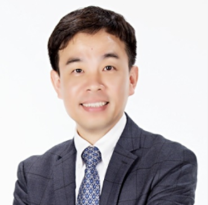
Keynote Speaker I
Prof. Yiu-ming Cheung, Hong Kong Baptist University, Hong Kong (IEEE Fellow)
Yiu-ming Cheung is currently the Chair Professor (Artificial Intelligence) in the Department of Computer Science, Dean of the Institute for Research and Continuing Education (IRACE), and Associate Director of the Institute of Computational and Theoretical Studies at Hong Kong Baptist University (HKBU). He received his PhD from the Department of Computer Science and Engineering at The Chinese University of Hong Kong. In recognition of his dedication and exceptional achievements, he has been elected a Member of the European Academy of Sciences and Arts (EASA), and a Fellow of IEEE, AAAS, IAPR, IET, BCS, and AAIS. Besides, he has been elected a Distinguished Lecturer of the IEEE Computational Intelligence Society and named Chair Professor in the Changjiang Scholars Program by the Ministry of Education of the People’s Republic of China. Professor Cheung’s research interests include machine learning and visual computing, with applications in data science, pattern recognition, multi-objective optimization, and information security. He has published over 300 articles in leading conferences and journals, e.g., TPAMI, TNNLS, TIFS, TIP, TMM, TKDE, TCYB, CVPR, NeurIPS, ICML, IJCAI, and AAAI. He is the recipient of: (1) 2023-2024 RGC Senior Research Fellow Award, (2) the President’s Award for Outstanding Performance in Scholarly Work (2023–2024), and (3) the 2023 APNNS Outstanding Achievement Award, among others. Furthermore, he has received several prestigious translational research awards, including: (1) the Gold Medal with Distinction (the highest grade in Gold Medals) and the Swiss Automobile Club Prize, at the 45th International Exhibition of Inventions of Geneva 2017, (2) the Gold Award at the Seventh Hong Kong Innovative Technologies Achievement Award in 2017, (3) the Gold Medal with Congratulations of Jury (the highest grade in Gold Medals) at the 46th International Exhibition of Inventions of Geneva 2018, and (4) the Gold Medal Award at the 15th International Invention Fair in the Middle East, held in Kuwait in February 2025. He is ranked among the World’s Top 2% Most-cited Scientists in Artificial Intelligence and Image Processing (actual ranking 0.28%) by Stanford University. Professor Cheung is currently serving as Editor-in-Chief of the IEEE Transactions on Emerging Topics in Computational Intelligence. Also, he is serving / has served as Associate Editor for several prestigious journals, including IEEE IEEE Transactions on Cognitive and Developmental Systems, ACM Transactions on Intelligent Systems and Technology, ACM Transactions on Social Computing, and Neurocomputing, as well as Guest Editor for several international journals. He was the Founding Chairman of the IEEE (Hong Kong) Computational Intelligence Chapter and served as Chair (2018–2022) of the Technical Community on Intelligent Informatics (TCII) of the IEEE Computer Society. He has held various roles, including Organizing Committee Chair, Program Committee Chair, Area Chair, and Financial Chair at numerous top-tier international conferences, such as IJCAI 2021, ICPR 2020, ICDM 2017 & 2018, WCCI 2016, WI-IAT 2012, ICDM 2006, and WI-IAT 2006. Currently, Professor Cheung is an Engineering Panel member of the Research Grants Council in Hong Kong, and a member of the assessment panel for the Enterprise Support Scheme (ESS) under the Innovation and Technology Fund (ITF). He also serves on the Fellow Evaluation Committees of both the IEEE Computer Society and the IEEE Computational Intelligence Society.
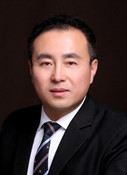
Keynote Speaker II
Prof. Guangjie Han, Hohai University, China (IEEE Fellow)
Guangjie Han (Fellow, IEEE) is currently a Professor with the Department of Internet of Things Engineering, Hohai University, Changzhou, China. He received his Ph.D. degree from Northeastern University, Shenyang, China, in 2004. In February 2008, he finished his work as a Postdoctoral Researcher with the Department of Computer Science, Chonnam National University, Gwangju, Korea. From October 2010 to October 2011, he was a Visiting Research Scholar with Osaka University, Suita, Japan. From January 2017 to February 2017, he was a Visiting Professor with City University of Hong Kong, China. From July 2017 to July 2020, he was a Distinguished Professor with Dalian University of Technology, China. His current research interests include Internet of Things, Industrial Internet, Machine Learning and Artificial Intelligence, Mobile Computing, Security and Privacy. Dr. Han has over 500 peer-reviewed journal and conference papers, in addition to 160 granted and pending patents. Currently, his H-index is 59 and i10-index is 249 in Google Citation (Google Scholar). The total citation count of his papers raises above 12900+ times. Dr. Han is a Fellow of the UK Institution of Engineering and Technology (FIET). He has served on the Editorial Boards of up to 10 international journals, including the IEEE Systems, IEEE/CCA JAS, IEEE Network, etc. He has guest-edited several special issues in IEEE Journals and Magazines, including the IEEE JSAC, IEEE Communications, IEEE Wireless Communications, IEEE Transactions on Industrial Informatics, Computer Networks, etc. Dr. Han has also served as chair of organizing and technical committees in many international conferences.He has been awarded 2020 IEEE Systems Journal Annual Best Paper Award and the 2017-2019 IEEE ACCESS Outstanding Associate Editor Award. He is a Fellow of IEEE.
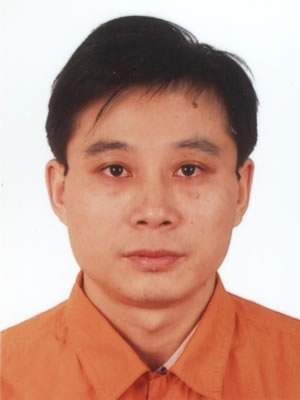
Keynote Speaker III
Prof. Qiu Daowen, Sun Yat-sen University, China
My main research outcomes have been in the following areas. (1) Quantum models of computation. (2) Quantum query algorithms. (3) Quantum cryptograpy and quantum communication. (4) Quantum states distinguishablility and quantum states cloning. (5) Theory of computation based on quantum and lattice-valued logic. (5) The applications of fuzzy and probabilistic automata to discrete event systems, focusing on diagnosability and supervisory control. We have published over 130 papers in peer-review journals, and over 25 conferences papers. More specifically, (1) we have systematically studied a number of different QFA (quantum finite automata) models, and solved the decidability of equivalence and minimization of these QFA models (D. Qiu, L. Li, X. Zou, P. Mateus, J. Gruska, Acta Informatica, 2011, 48 (5-6): 271-290; P. Mateus, D. Qiu, L. Li, Information and Computation, 2012, 218: 36-53;L. Li, D. Qiu, Theoretical Computer Science, 2008, 403(1): 42-51). Therefore, we have answered the problems of how to decide the equivalence of quantum sequential machines proposed by Professor Gudder, and how to decide the equivalence of MM-1QFA proposed by Professor Gruska. In particular, we have answered the problems of how to minimize QFAs proposed by Moore and Crutchfield. We proposed a model of quantum-classical finite automata, named as one-way quantum finite automata together with classical states (D. Qiu, L. Li, P. Mateus, A. Sernadas, Journal of Computer and System Sciences, 2015, 81(2): 359-375). Also, we have studied some properties of 2QFAC, quantum pushdown automata, and quantum Turing machines. (2) We have proved the characterization of all Boolean functions that can be solved by quantum 1-query algorithm. (3) We have studied quantum states discrimination and quantum cloning machines, and we have derived some bounds on unambiguous discrimination and minimum-error discrimination (some bounds are optimal to a certain extent), and some relationships between unambiguous discrimination and minimum-error discrimination have been clarified. Also, we have established a generic machine model of probabilistic cloning and deleting, and proposed a universal probabilistic deleting machine. (4) We have studied quantum teleportation and superdence coding based on different entangled states (W-states). (5) We have studied semi-quantum cryptography and proved that a semi-quantum key distribution protocol is unconditional security. (6) We have discovered some essential connections between quantum logic and models of computation, and we have established residuated lattice-valued automata theory (D. Qiu, Information and Computation, 2004, 190(2): 179-195). (6) We have established a fundamental framework of the supervisory control for fuzzy discrete event systems (FDES) and developed the supervisory control of probabilistic discrete event systems (PDES), using fuzzy automta and probabilistic automata, respectively.
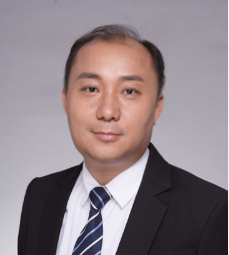
Keynote Speaker IV
Prof. Hongbo Jiang, Hunan University, China
Hongbo Jiang is currently a Distinguished Professor and Vice Dean of the College of Computer Science and Electronic Engineering (CSEE), Hunan University. He is also the director for the trusted systems and networking key laboratory of Hunan Province, the director of Hunan international technical cooperation base of high performance computing and applications. Prior to Hunan University, he was a tenured professor at Huazhong University of Science and Technology. He received his Ph.D. in Computer Science from Department of Electrical Engineering and Computer Science working with Prof. Shudong Jin, Case Western Reserve University. He ever interned at IBM T. J. Watson Research Center, as well as AT&T Labs Research. He was a Hong Kong Scholar Research Fellow at The Chinese University of Hong Kong, working with Prof. John C. S. Lui. Hongbo has been serving in the editorial board of IEEE/ACM Transactions on Networking, IEEE Transactions on Mobile Computing, ACM Transactions on Sensor Networks, IEEE Transactions on Network Science and Engineering, IEEE Transactions on Intelligent Transportation Systems, IEEE Transactions on Vehicular Technology, IEEE Internet of Things Journal, IEEE Communications Magazine, ACM/Springer Wireless Networks, Wiley Security and Communication Networks, International Journal of Ad Hoc and Sensor Wireless Networks, as well as serving as Editor-in-Chief of Journal of The Academy of Artificial Intelligence Sciences. He has also been guest editors for IEEE Transactions on Industrial Informatics, Springer Mobile Networks and Applications. He is an elected Member of Academia Europaea (MAE), Fellow of IET (The Institution of Engineering and Technology), Fellow of BCS (The British Computer Society), Fellow of AAIA (The Asia-Pacific Artificial Intelligence Association), Fellow of AAIS (The Academy of Artificial Intelligence Sciences), Fellow of AIIA (The International Artificial Intelligence Industry Alliance), Senior Member of ACM, Senior Member of IEEE, Distinguished Member of CCF, and Full Member of IFIP TC6 WG6.2. Now his research focuses on computer networking, especially, wireless networks, and mobile computing.
Keynote Speaker V
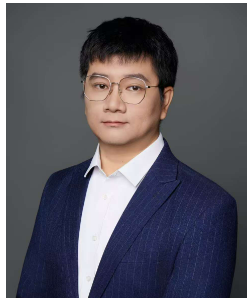
Prof. Lei Zhang, Chongqing University, China
Lei Zhang (Senior Member, IEEE) received the Ph.D. degree in circuits and systems from the College of Communication Engineering, Chongqing University, Chongqing, China, in 2013. He was a Post-Doctoral Fellow with The Hong Kong Polytechnic University, Hong Kong, from 2013 to 2015. Since 2015, he has been a full professor with Chongqing University, China. He has authored 200 scientific papers in top journals and conferences, including IEEE TPAMI, IJCV, TIP, TNNLS, TMM, TCSVT, TGRS, CVPR, ICCV, ECCV, ICML, AAAI, and etc. His current research interests include deep learning, computer vision, and vision-language models. He was a recipient of the ACM SIGAI Rising Star Award and IEEE Norbert Wiener Review Award. He is on the Editorial Board of several journals, such as IEEE Transactions on Image Processing, IEEE Transactions on Instrumentation and Measurement and Neural Networks (Elsevier). He has been a general chair for several international conferences.
